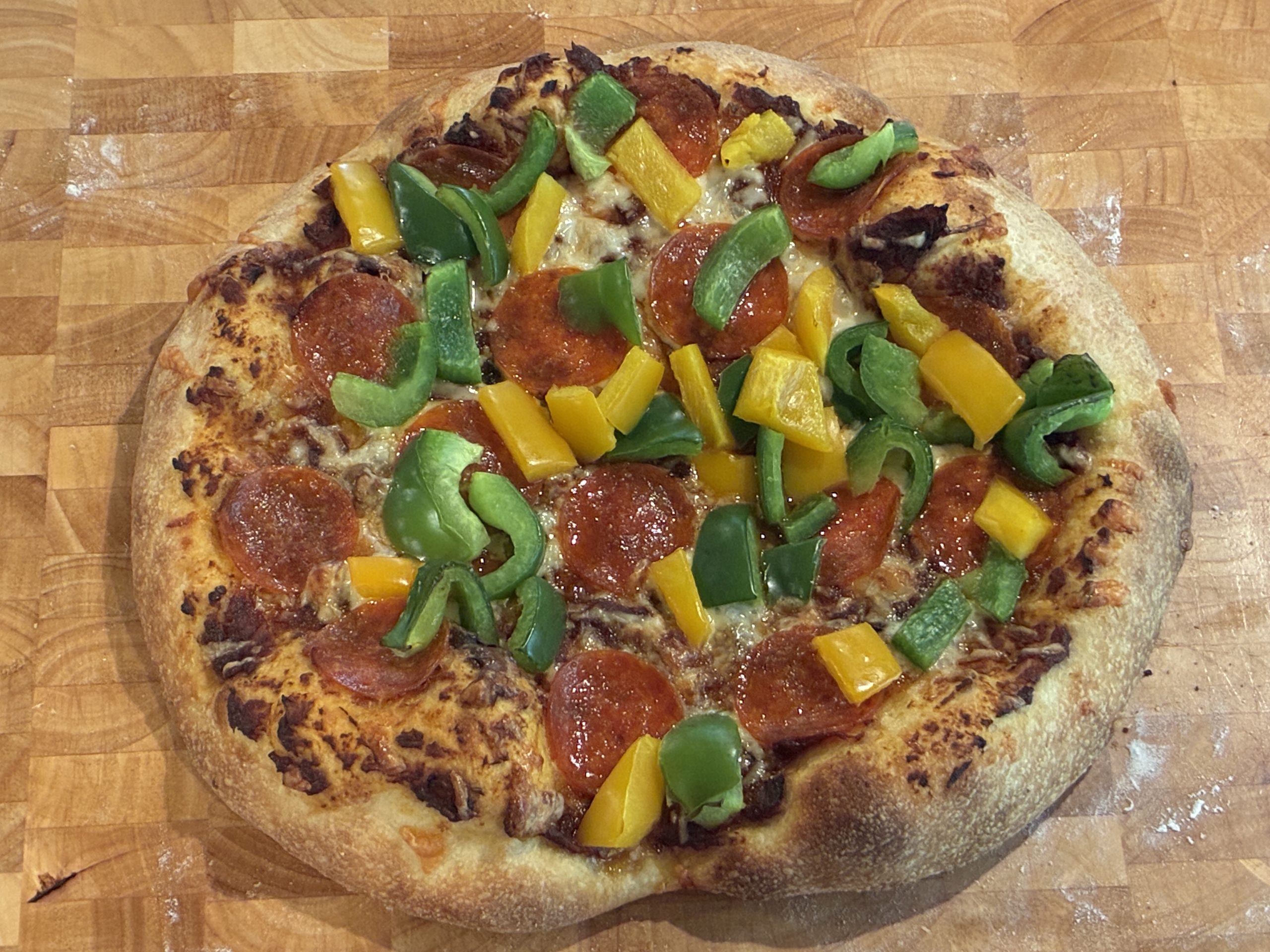
I’m loving making pizza. I’ve been doing it for a few years, and I think I’ve finally found a great recipe. After watching lots of YouTube videos and Instagram Reels, I am starting to dial in the process. The recipe below is pretty hands off and calls for one rise.
What I started doing and found to make much better dough is to incorporate some stretch and pull every hour while the dough is rising. Give the dough plenty of time to rest between each stretch, and your pizza will come out much fluffier, easier to stretch, and you get a really great rise on your crust.
My favorite new technique is making a cast iron deep dish pizza. Coat your cast iron pan with quite a bit of olive oil, stretch your dough in the pan, but let it rest about 30 minutes before stretching it again. Repeat this a few times until the dough reaches the edges of your pan. Par bake the dough, add your ingredients, and bake the most delicious pan pizza you’ve ever had.
I still bake in a conventional oven. I’ve been using a Lodge Cast Iron pizza pan a lot more than our old pizza stone. You get a better crips on the bottom of your crust. My dream is to get an actual pizza oven for a true brick oven taste, but everyone has really liked how the pizzas have been turning out lately.
Ingredients
- 4 to 4-½ cups all-purpose flour pizza flour, or bread flour (480 to 540 grams)
- 1 tablespoon sugar (13 grams)
- 2 teaspoons salt (12 grams)
- 2-¼ teaspoons Quick Rise Instant yeast (7 grams)
- 1-½ cups warm water (105°F to 110°F) (354 grams)
- 3 tablespoons olive oil (39 grams)
Instructions
- Preheat the oven to 450°F (500°F if your oven can handle it) if you plan to bake a pizza (otherwise you can freeze the dough after you make it).
- Combine 4 cups of flour, sugar, salt, and yeast in a mixing bowl and whisk together.
- Add the water and olive oil. Mix until blended. If it is too wet, gradually add enough flour to make a soft dough. The dough should be slightly sticky.
- Transfer the dough to a floured surface and knead until smooth, about 5 minutes (you can also use your stand mixer with a dough hook).
- Plase the dough in a greased bowl and let it rest on the counter for 10 to 15 minutes if you use Quick Rise instant or for 60 to 90 minutes if you use standard instant yeast. The dough should almost double in size.
- Divide the dough into two balls.
- At this point, you can either freeze the dough or prep it for a pizza.
To freeze the dough:
- Coat each ball of dough in some olive oil. Wrap the dough in plastic wrap then slide it into a zipper-seal bag.
- Squeeze all the air out of the bag then freeze if for up to 3 months.
To Bake the pizza:
- Roll the balls of dough into 10 to 12” circles and place them on a sheet of parchment paper (or press them into a greased sheet pan).
- Form a rim around the pizza dough by rolling the edges in and pinching.
- Spread pizza sauce on the dough and add your desired toppings.
- Bake for 12 to 15 minutes until the edges are golden brown and the cheese is bubbly (a thicker crust will need to bake for 20 to 22 minutes).
Notes
- The quick rise time is dependent on using the right type of instant yeast. RapidRise instant yeast or Quick-Rise instant yeast are formulated to activate faster than standard instant yeast. If you use standard instant yeast, give the dough 30 to 50 minutes to rise.
- Optional add-ins: Add 1 teaspoon each of garlic powder and onion powder to the dry mix and blend it in well.
- If you want to have a longer ferment time to develop more flavor, use standard instant yeast (not the RapidRise) and reduce the amount to 1/4 teaspoon. You can let it rise for 4 to 5 hours at room temperature or for 8 to 24 hours in the fridge.
- To use frozen pizza dough, let it thaw in the fridge overnight. Let the thawed dough sit on the counter for 20 to 30 minutes before rolling it out for pizza.
- Bakers percentages using 4-1/2 cups of flour: flour 100%, sugar 2%, salt 2%,, yeast 0.7%, water 65%, oil 2%
- If you plan to use the pizza dough in an outdoor pizza oven, use the larger amount of flour and add up to 1/4 cup additional flour. Since outdoor pizza ovens cook pizza very quickly, you should use dough with less hydration.
- Pizza flour, all-purpose flour, and bread flour absorb liquid differently. If you find the dough too sticky, sprinkle in a bit more flour.
- All-purpose flour will make a crispier crust, bread flour will make more of a fluffy yet chewy crust, and pizza flour will give a balance of crispy and chewy (and it will also be easier to shape). You can swap out 1/2 cup regular flour with wheat flour.


Leave a Reply